Transcatheter Aortic Valve Replacement (TAVR) has become a transformative treatment for patients with severe aortic stenosis who are at high or intermediate surgical risk. Pre-procedural planning relies heavily on computed tomography (CT) imaging, which provides essential information about the aortic root anatomy, valve morphology, coronary height, and vascular access pathways. However, current assessment pipelines are largely manual and dependent on expert interpretation, which can introduce subjectivity, delay, and variability.
The proposed research aims to develop and pretrain a 3D encoder with a segmentation head using publicly available CT datasets covering the aorta, coronary arteries, and thoracic vasculature.
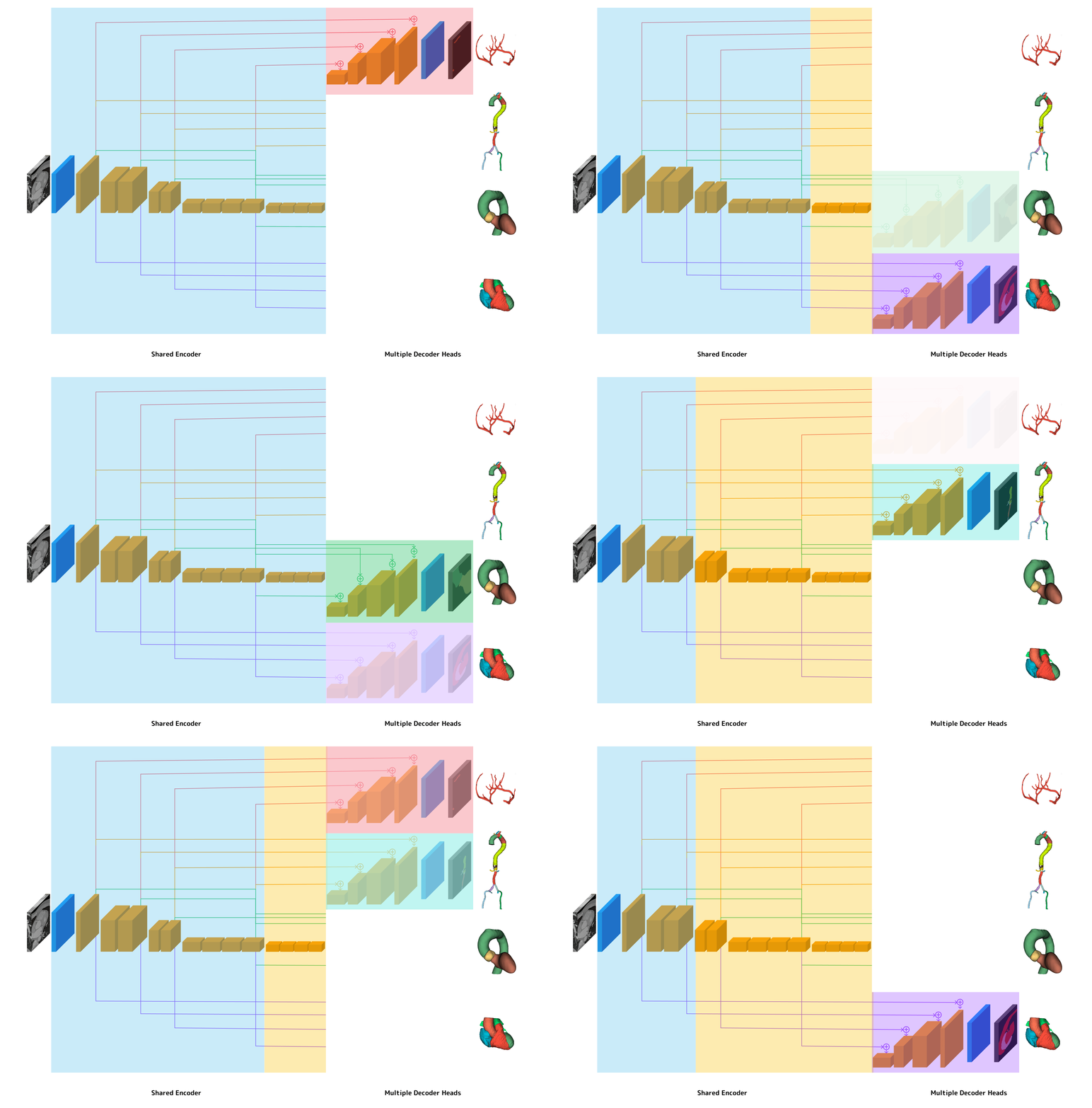 Shared encoder SegResNet
This pretraining phase will allow the model to learn robust anatomical features without requiring TAVR-specific outcome labels. Once the encoder has acquired a strong understanding of cardiovascular structures, it can later be fine-tuned on institutional TAVR cohorts to predict clinically relevant outcomes such as paravalvular leak, pacemaker implantation, or vascular complications.